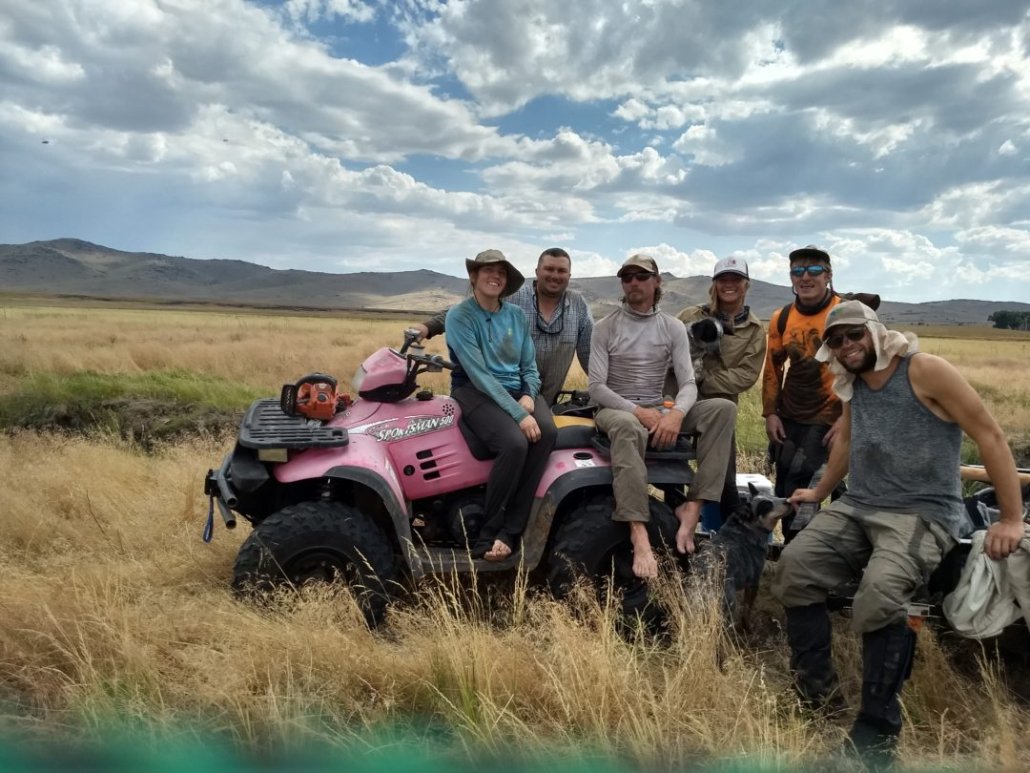
PBR is watershed restoration using stream power to do the work instead of diesel. Basically, our job is to be two-legged beavers.And there’s nothing complicated about most of it. We’re just using simple hand tools, some elegant design methods, and the massive free energy of stream power to drive system recovery. We start by addressing source problems, to ensure we’re actually treating the root causes of watershed degradation, rather than wasting money and carbon trying to manage symptoms.
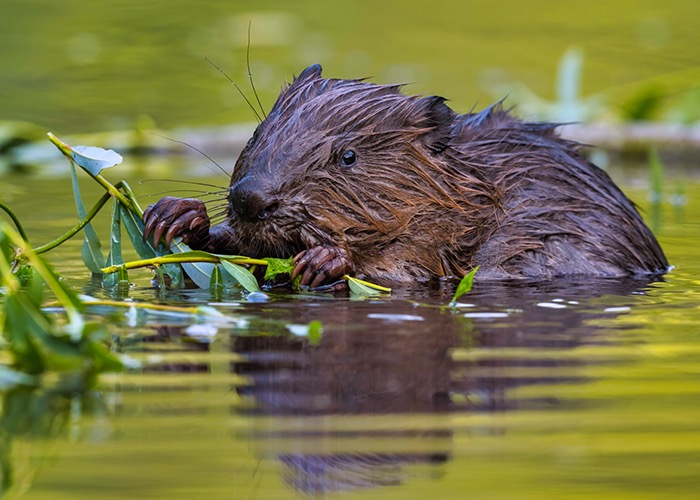
Here’s a snip from some truly fantastic nerdery—it turns out beavers are pretty good at felling trees towards the water. This reduces their exposure to predation and cuts down on the energy they expend dragging branches. I thought this was a pretty cool look at how smart these critters really are.
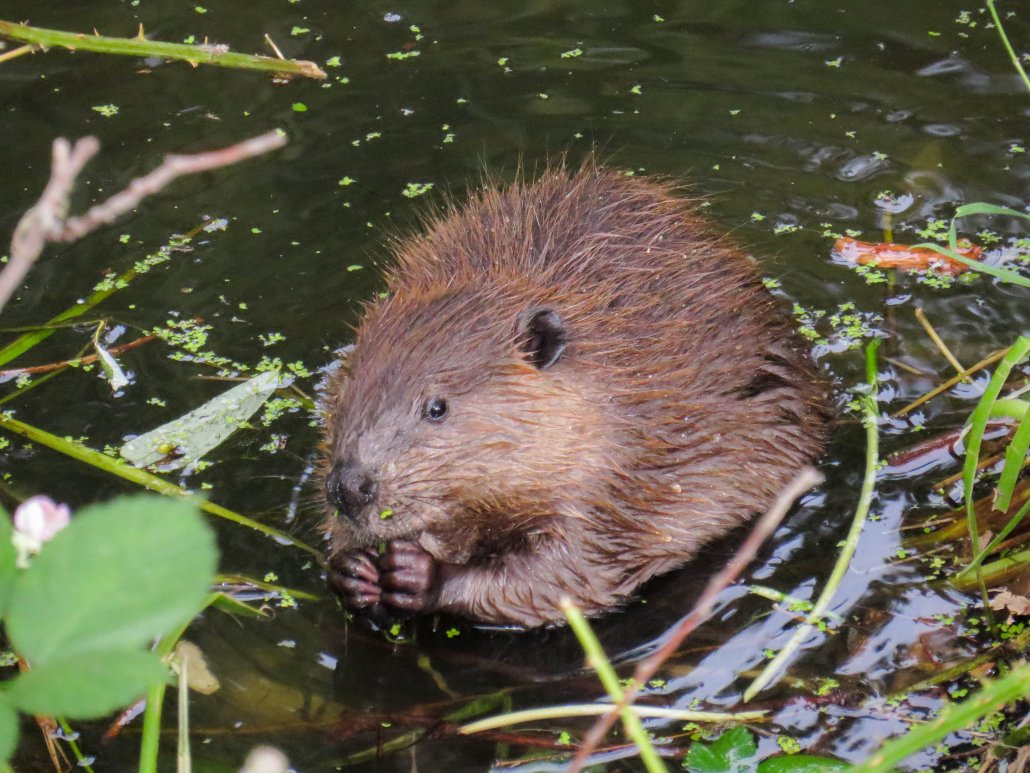
We’re killing beavers all over California, and more every year. Does this mean there are more beavers? Or that we’re encroaching on more of their habitat? Since there’s no current data on total population, I wonder if there’s any possible extrapolation from kill numbers, even to within an order of magnitude. Probably not, so let’s try to make relocation legal as soon as possible. California’s dehydrated, streams are getting flashier all the time, and what, exactly, does LA plan to drink when the Sierras are dry? Thoughts?
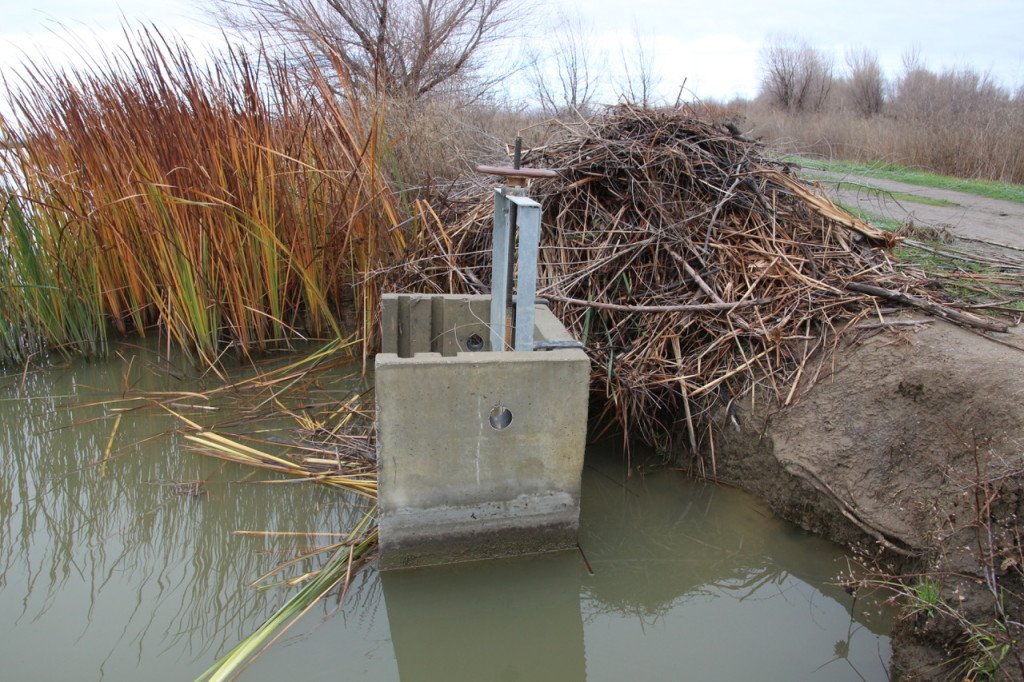
Here’s an interesting challenge that just showed up—how to deal with beavers in a controlled wetlands built for duck hunting? Hint: not like this: That’s a flood/drain valve meant to control water height. The giant pile of sticks and cattails behind it isn’t a beaver lodge, it’s two hours of some guy’s life, every single day, unplugging the 25 different drains that make this system run.
Working with captive beavers awaiting relocation, I collected their favorite food (aspen trees) in their favorite size (2 years old) and presented the sticks with foliage attached and painted on the (non)deterrents as high up as they could chew. The sticks were anchored in metal tubes attached to a feeding platforms, 4 to a side, a couple feet apart, with control and treatment sticks randomly assigned a position using a random number generator. The beavers had all the rodent chow and water they could want, but nothing else to chew on except the plywood on their ramps and the undersides of the roofs of their hutches.
As you’d expect, they ate all the controls every time, starting with the first night. As you might not expect, they also ate all the treatments. I tried 20 different things, and nothing worked.
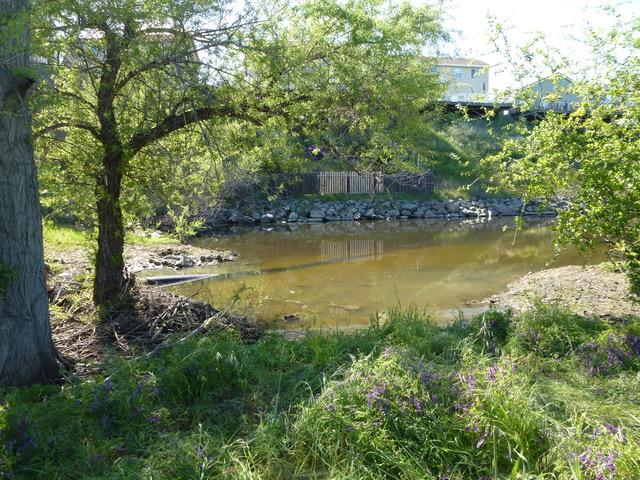
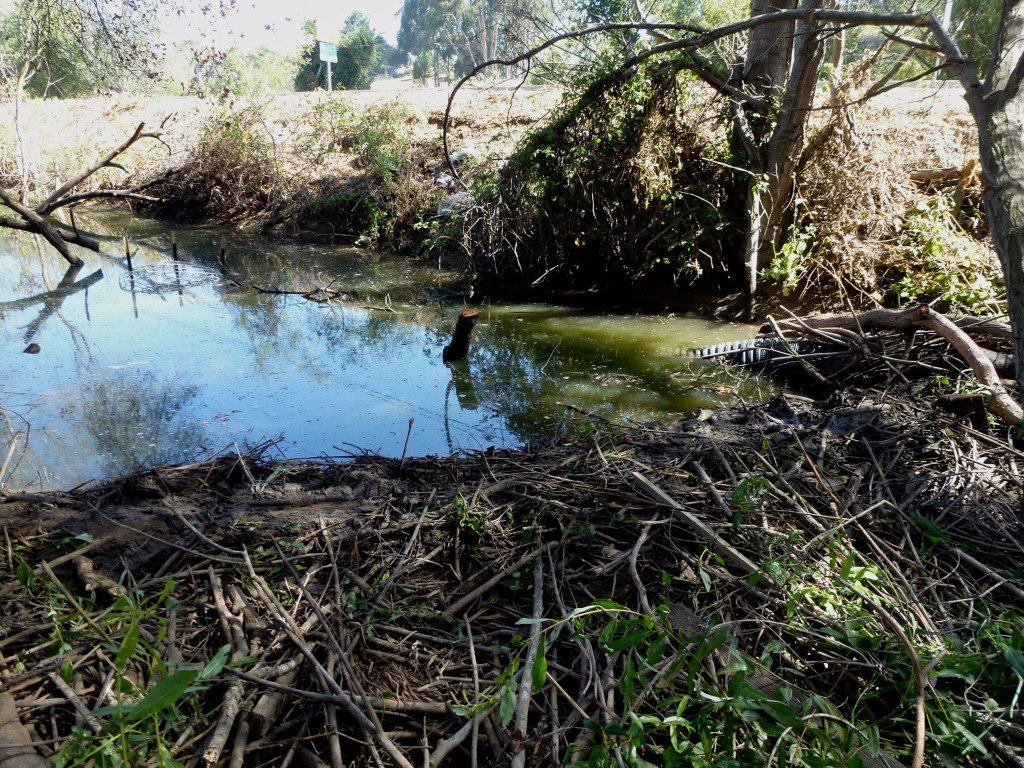
Well, after 11 months, 9 visits and two reports, we’re done! The device is working perfectly, my maintenance visit took 10 minutes car to car, and resulted in a handful of debris that fit in a 1/2 gallon mason jar with room to spare. These devices truly are low maintenance, even during an El Niño winter. Many, many thanks for the heroes of Caltrans: Scott Dowlan, who built such a fantastic site the beavers couldn’t resist it; Nancy Siepel, biologist extraordinaire who figured out the permitting; and Katherine Brown, the tireless advocate for Team Beaver.
Thanks to Caltrans and the Tri-County Fish Team for a great pair of presentations. I really enjoyed the questions, insight and reflections everyone offered, and appreciate the time everyone took to come out for the talks. I’m posting a combined slideshow/handout from both presentations, hoping it will be useful to attendees and other folks interested in beavers and restoration. Please contact me with any questions or comments you might have, and I’ll put together a bunch of links in the next few days that fill out the research this show is based on. I hope this link works…